Make sure you have 12 nice photos suitable for editing.
Today you will take even more macro photos. Remember, just keep snapping away! Change your lighting a little bit, snap, try a different angle, snap, move your pieces, snap. Do not be afraid to collect a LOT of images. Then you have choices later! On the macaw feathers alone I took 10 different images, 6 of which turned out usable (not blurry):
Thursday, February 18, 2016
Wednesday, February 17, 2016
Macro Photography.... Continued
Remember, MANUAL mode is not the same as MACRO mode.
You need to turn your top dial to "M" for Manual mode,
but you also need to turn your keypad by the LCD screen to the little flower for MACRO mode.
Tuesday, February 16, 2016
Each partner will shoot their own 10 images.
You will shoot in manual mode (M). With your camera set to MACRO (the little flower).
Copy this list of challenges. Be creative!! Use rule of thirds.
1. Cutlery. Knives, forks and spoons can make great macro subjects. Arrange like pieces together to create lines and patterns. (Since we don’t have any, we will have to try scissors)
2. Feathers. Feathers are beautiful close up. The central shaft creates a strong line which may be curved or straight, while the rest of the feather provides a soft texture.
3. Human Textures. Try capturing the texture of hair, skin, nails, etc. Think about the wrinkles on our hands or close-ups of eyes or teeth.
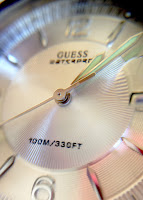
4. Glass. Close up photos of fine crystal glassware can
yield wonderful abstracts filled with curved lines and reflections. For added
fun, place glasses side by side, or one behind the other to create lines where
they overlap. You can fill the glasses with colored items for even more
creative images.
5. Reflections- Photograph shiny things. Look for jewelry, foil, nails, machinery, even ice.
6. Fruit and vegetables. They’re not just good for your diet! Fruit and vegetables make great macro photography subjects. Try kernels of corn on the cob, citrus slices, or go for more exotic fare like dragon fruit. You can also photograph the fruit or vegetables on plates in complementary colors. (We can use any food we can find)
7. Rust and peeling paint. Fascinating rust patterns can be found on an old car, or even a metal garbage can in the park. Peeling paint graces old fences and walls. (Look for dumpsters, old cars, old fences.) Most people pass by such items without a second glance. Just beware of harsh shadows if you are photographing in bright sunlight.
8. Car details. The sleek lines of shiny chrome and trim on a polished car can provide hours of photographic entertainment. You can photograph your own car, but don’t be shy about taking your camera to an antique car show. Car owners are usually proud of their vehicles, and won’t mind your photographing the details.
9. Water droplets. This one is a classic, but be creative, and find your water on unusual surfaces like a wire fence, a cobweb, or a rear-view mirror. Early morning dew makes almost any subject magical. In the Spring or Fall, your can look for frost instead of dew.(Drinking fountains, puddles, bottles) Put a few drops on some flowers!
10. Tissues & paper. For some high key abstracts, and a really unusual subject, try photographing a tissue or a crumpled piece of printer paper. With a little imagination, the lines and shadows formed by the soft folds can create some intriguing images.
You will shoot in manual mode (M). With your camera set to MACRO (the little flower).
Copy this list of challenges. Be creative!! Use rule of thirds.
1. Cutlery. Knives, forks and spoons can make great macro subjects. Arrange like pieces together to create lines and patterns. (Since we don’t have any, we will have to try scissors)
2. Feathers. Feathers are beautiful close up. The central shaft creates a strong line which may be curved or straight, while the rest of the feather provides a soft texture.
3. Human Textures. Try capturing the texture of hair, skin, nails, etc. Think about the wrinkles on our hands or close-ups of eyes or teeth.
5. Reflections- Photograph shiny things. Look for jewelry, foil, nails, machinery, even ice.
6. Fruit and vegetables. They’re not just good for your diet! Fruit and vegetables make great macro photography subjects. Try kernels of corn on the cob, citrus slices, or go for more exotic fare like dragon fruit. You can also photograph the fruit or vegetables on plates in complementary colors. (We can use any food we can find)
7. Rust and peeling paint. Fascinating rust patterns can be found on an old car, or even a metal garbage can in the park. Peeling paint graces old fences and walls. (Look for dumpsters, old cars, old fences.) Most people pass by such items without a second glance. Just beware of harsh shadows if you are photographing in bright sunlight.
8. Car details. The sleek lines of shiny chrome and trim on a polished car can provide hours of photographic entertainment. You can photograph your own car, but don’t be shy about taking your camera to an antique car show. Car owners are usually proud of their vehicles, and won’t mind your photographing the details.
9. Water droplets. This one is a classic, but be creative, and find your water on unusual surfaces like a wire fence, a cobweb, or a rear-view mirror. Early morning dew makes almost any subject magical. In the Spring or Fall, your can look for frost instead of dew.(Drinking fountains, puddles, bottles) Put a few drops on some flowers!
10. Tissues & paper. For some high key abstracts, and a really unusual subject, try photographing a tissue or a crumpled piece of printer paper. With a little imagination, the lines and shadows formed by the soft folds can create some intriguing images.
Tuesday, February 9, 2016
Turn in your painting with light contact sheet
Complete the shutter speed study questions from yesterday (listed below)
Check your Aeries to make sure your grade is correct, so you do not mistakenly get a progress report.
Study for our big test tomorrow using the Aperture/ISO quiz and yesterday's shutter speed questions.
Complete the shutter speed study questions from yesterday (listed below)
Check your Aeries to make sure your grade is correct, so you do not mistakenly get a progress report.
Study for our big test tomorrow using the Aperture/ISO quiz and yesterday's shutter speed questions.
Shutter speed test questions
1.
What happens
to the light levels in your photo as your shutter speeds got longer?
2.
What happened to the amount of motion blur as
your shutter speeds got longer?
3.
What shutter speed would work
best outside?
4.
What does the aperture do when the shutter is
REALLY fast, like 1/2000 of a second?
5.
What does the aperture do as the shutter gets
slower and the camera lets in more light?
6.
review
question! What is the problem if my images are coming out grainy?
7.
1. When we are talking about cameras, what is a
“shutter”?
8.
2. What is an example of a fast shutter speed?
9.
In what type of conditions would you use a fast
shutter speed?
10.
What is
an example of a very slow shutter speed?
11.
In what type of conditions would you use a very
slow shutter speed?
12.
If your
subject is playing sports outside in bright sunlight, what kind of shutter
speed would I use?
13.
Do I use fast or slow shutter speeds if I want
my subject to be blurry?
14.
Do I use
fast or slow shutter speeds if I want my subject to be frozen in motion, not
blurry at all?
15.
9. The BIG PICTURE: What are the 2 main things
we control in our pictures using shutter speed?
Monday, February 8, 2016
Today you will edit your 12 shots.
Crop any excess darkness out of the image. Then adjust the levels for color if you want. Here is an example of a before and after:
You can name the photos as follows:
design1.jpg design2.jpg design3.jpg
writing1.jpg writing2.jpg writing3.jpg
silhouette1.jpg silhouette2.jpg silhouette3.jpg
portrait1.jpg portrait2.jpg portrait3.jpg
Run a 3 column, 4 row contact sheet and name it lastname_firstname_light.jpg
Crop any excess darkness out of the image. Then adjust the levels for color if you want. Here is an example of a before and after:
| Before |
![]() |
| After |
You can name the photos as follows:
design1.jpg design2.jpg design3.jpg
writing1.jpg writing2.jpg writing3.jpg
silhouette1.jpg silhouette2.jpg silhouette3.jpg
portrait1.jpg portrait2.jpg portrait3.jpg
Run a 3 column, 4 row contact sheet and name it lastname_firstname_light.jpg
Thursday, February 4, 2016
Silhouettes/portraits
Today you will finish getting 3 silhouettes from yesterday, and begin to get 3 portraits. Portraits are done by standing EXTREMELY still and lighting your own face (or having a partner light you). You can get multiples of yourself by turning the light off, repositioning yourself, and lighting again.
Wednesday, February 3, 2016
Today's goal: 3 Silhouettes
Today you will try to get 3 SILHOUETTES. A silhouette is a photograph where the subject is back lit so harshly that only a shadow remains.
Tuesday, February 2, 2016
Monday, February 1, 2016
PAINTING WITH LIGHT!
Time to start one of my favorite projects!
This project requires you to use creativity, teamwork, perseverance, and technique.
We will turn the lights off and use an 8 second shutter speed along with glow sticks, cell phone flashlights, apps, etc. to write, draw, and design.
Subscribe to:
Posts (Atom)


